Programs
Linden Grove School is organized into four multi-grade programs that allow us to thoughtfully support each student’s academic, social, and therapeutic needs. Rather than grouping students strictly by age or grade level, we create classrooms based on how students learn best and the types of support they benefit from. This approach helps us align instruction, pacing, and supports while building strong relationships and a sense of belonging within each program.
These programs include:
- Early Childhood (grades kindergarten through 3rd)
- Primary (grades 2nd through 5th)
- Intermediate (grades 4th through 7th)
- Middle School (grades 6th through 8th)
Pathways
Within each program, there are three different classroom pathways designed to support diverse learning needs. Teachers may teach in one or more pathways throughout the day, and students—most often older students—may experience different pathways as part of their schedule based on what supports them best. This flexibility is more common for older students.
Connections Path
When students are given true access and seen as capable, connection and engagement begin to unfold. In Connections classrooms, we intentionally remove barriers by building strong sensory and communication supports that help students feel regulated and understood. Predictable routines, an individualized pace, and learning broken into manageable pieces further reduce overwhelm, creating space for connection, confidence, and growth.
What this looks like:
· Evidence-based intervention programs
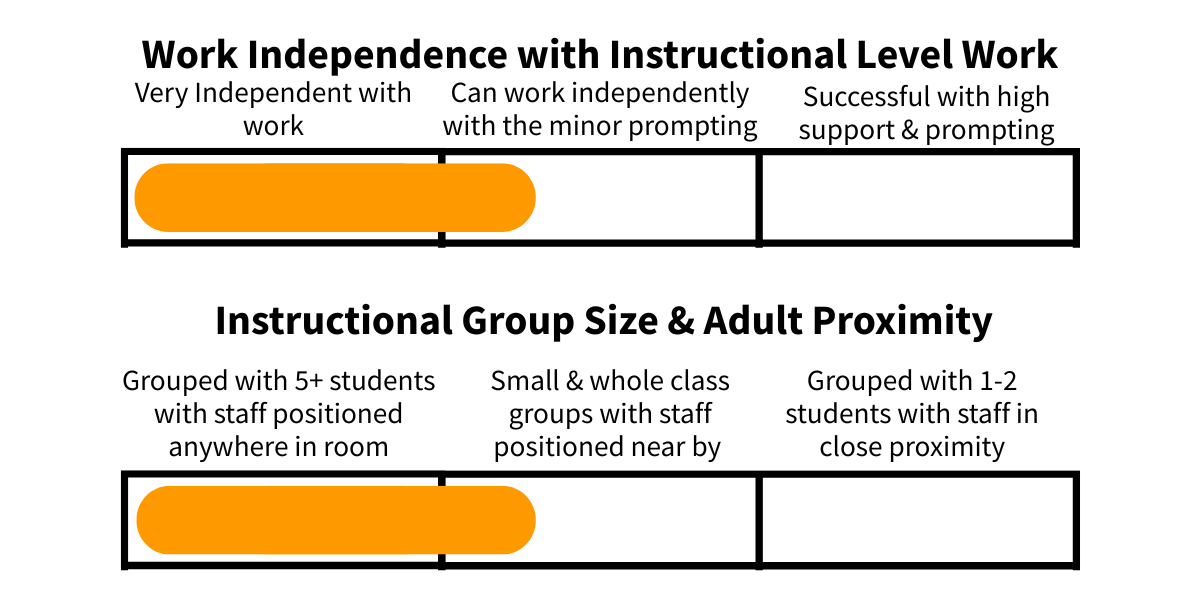
· Very small instructional groups (1:2–1:3)
· A highly structured classroom with predictable routines and accommodations that also support sensory and communication needs
Skill Profile
.png)
.png)
Confidence Path
Confidence grows when students are given time, support, and the chance to experience success—especially when students are supported in ways that honor how they learn best. In Confidence classrooms, students learn in small groups using evidence-based programs designed to strengthen skills, build self-awareness, and grow independence. Instruction is thoughtfully paced, giving students time to practice, reflect, and try again with guidance and encouragement.
What this looks like:
· Intervention programs and a blend of general education curriculum (at an adjusted pace or level) and
· Instruction primarily in small groups (1:2–1:4), with select whole-group lessons
· Students may have a diagnosis or show symptoms of dyslexia, dysgraphia, dyscalculia, or other learning differences
Skills Profile
.png)
.png)
Collaboration Path
Collaboration classrooms are designed to help students use their academic skills in shared learning settings. Through structured lessons and guided activities, students work together to complete academic tasks, discuss ideas, and solve problems. Teachers provide structure and support so students can practice working as part of a group while strengthening communication, flexibility, and academic understanding.
What this looks like:
· General education curriculum delivered with individualized accommodations
· Whole-group instruction delivered in small class settings (1:6–1:8)
· Gradual fading of support to encourage independence while students work together on problem-solving and
executive functioning skills
Skills Profile
.png)